


Maybe it’s just my feed. I’ve always been a sucker for tales of medieval chivalry and terror alike, and witchy crowds always love some good woodcuts and Middle-Ages-inspired fantasy settings.
But after a little research, I don’t think it’s just me — the medieval and medieval-inspired are trending.
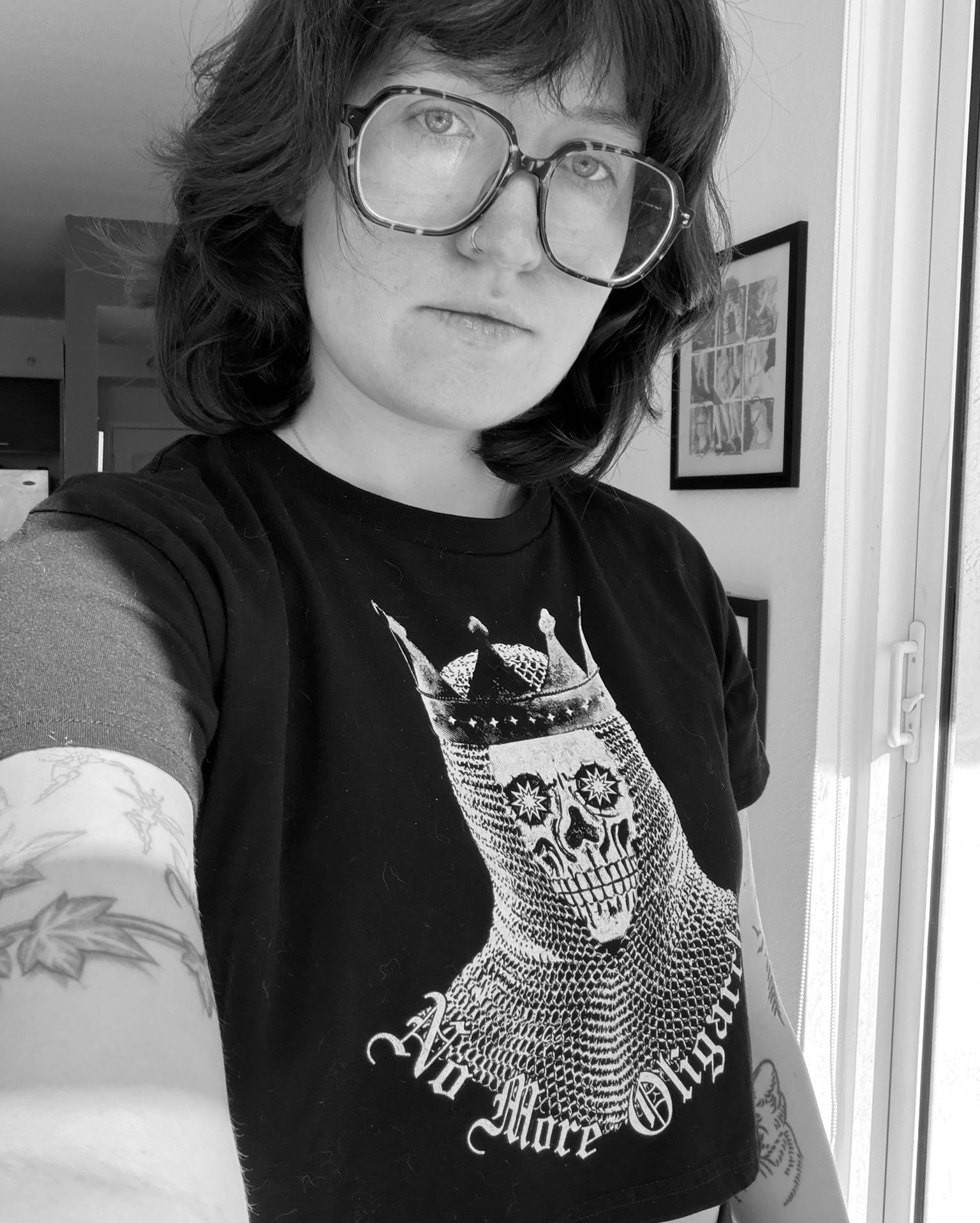
Searches for the terms “medieval aesthetic,” “knight aesthetic,” and “medieval fantasy” have surged in the last few years, according to Google Trends. Same story with similar terms on Pinterest. Books such as Christopher Buehlman’s Between Two Fires and Caitlin Starling’s The Starving Saints are medieval horror books that have surged in popularity. Video games like Elden Ring, Plague Tale, and Kingdom Come: Deliverance bring their own versions of the Middle Ages to life. Brands like While Odin Sleeps sell clothing with knight-themed designs. Artist brands such as Cat Coven create patches, prints, and more inspired by medieval manuscript marginalia. There are more than a few “bardcore” covers of pop songs on YouTube (Shakira’s Hips Don’t Lie cover has 9.3 million views).
Why? Why, in the most technologically advanced time ever, are we hearkening back to the time of feudal lords, knights, and plenty of peasants?
I started down the rabbit hole of medieval popularity to test a thesis. I believe that the “medieval aesthetic” is trending for a reason.
What many call late-stage capitalism is comparable to those feudalistic times, with some foretelling an age of digital feudalism.
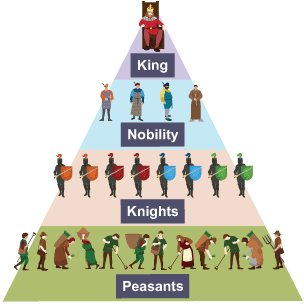
Take a look at the diagram above illustrating the various classes of European feudalism. If something looks off to you, that’s because it is. It doesn’t show the distribution proportionally. About 90% of the population was made up of peasants, not whatever that green section at the bottom is showing.
We’re often taught in school that this was just how things worked, and then it slowly evolved into capitalism. That’s also wrong. Medieval Europe was full of peasant rebellions, movements toward more collective property, and pushback against upper-class societal control.

Today, we are seeing mirror images of this societal structure and these movements. Think of the “We are the 99%” movement that started with Occupy Wall Street. The modern wealth gap is shameful.
Many groups are pushing away from these harmful effects of late-stage capitalism, and progressive politicians are beginning to lead the push publicly, regardless of fantastically wild rhetoric from those who are fans of the current system (Zohran Mamdani, anyone?). In our own modern way, we are having “peasant rebellions” against the upper classes with the most power, wealth, and oppressive force.
But why didn’t we learn about the rebellions of the Middle Ages in school? I mean, knights are really cool, but collective bargaining and some heretics can be, too.
The answer is simple: It’s harder to fight against a system when you don’t think there’s a precedent for resistance. Historians of this topic, such as Silvia Federici, know that well:
This is why in Caliban and the Witch I reconstruct the anti-feudal struggles of the Middle Ages and the struggles by which the European proletariat resisted the advent of capitalism. My goal in doing so is not only to make available to non-specialists the evidence on which my analysis relies, but to revive among younger generations the memory of a long history of resistance that today is in danger of being erased. Saving this historical memory is cruicial if we are to find an alternative to capitalism. For this possibility will depend on our capacity to hear the voices of those who have walked similar paths.
— Silvia Federici, Caliban and the Witch
Finally, this leads me to the thesis I wanted to test: The medieval aesthetic is becoming more popular because the modern wealth gap mirrors that of the European feudal era, and though we may not have been taught about the rebellions that took place then, we know that that time of upheaval and extreme inequality may give us inspiration for our resistance in the present day.
What do you think of this theory? Comment or send me a message. I’d love to see if it resonates with you.
Submit your ideas!

Have something you want to share? Whether it’s a witchcraft-related secret, a new poem, a personal essay, a spell, or a wild short story, I want to take a look. Send me an email at kira (at) busywitch.com.