


Sink your teeth into these witchy works.

This week: An interview with Virginia, designer and founder of Tarantula Studio.
When I met with Virginia, two things struck me: 1) I’ve been following her so long it felt like I was meeting a celebrity, and 2) She was just so enthusiastic to share her work, her clients, and her motivations.
Virginia shared incredible stories and advice about her business’s growth, what it means to be in alternative branding, and how she sees Tarantula Studio growing in the future. And I’ll keep the intro short — the rest, I want you to hear directly from her.

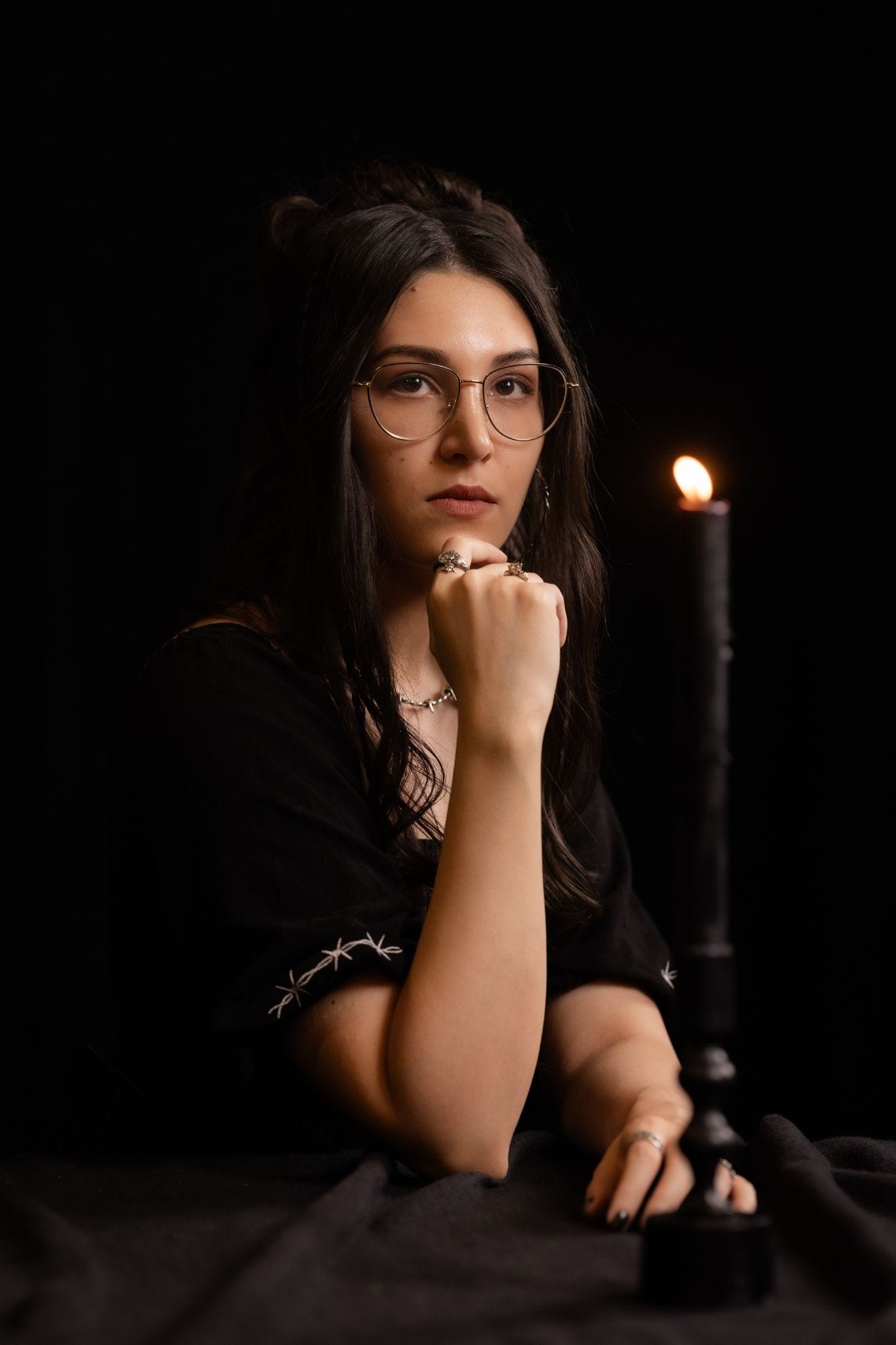
Busy Witch: Let’s jump in with the first “tell me about yourself” question. Tell me your name, where you’re from, and your definition of who you are.
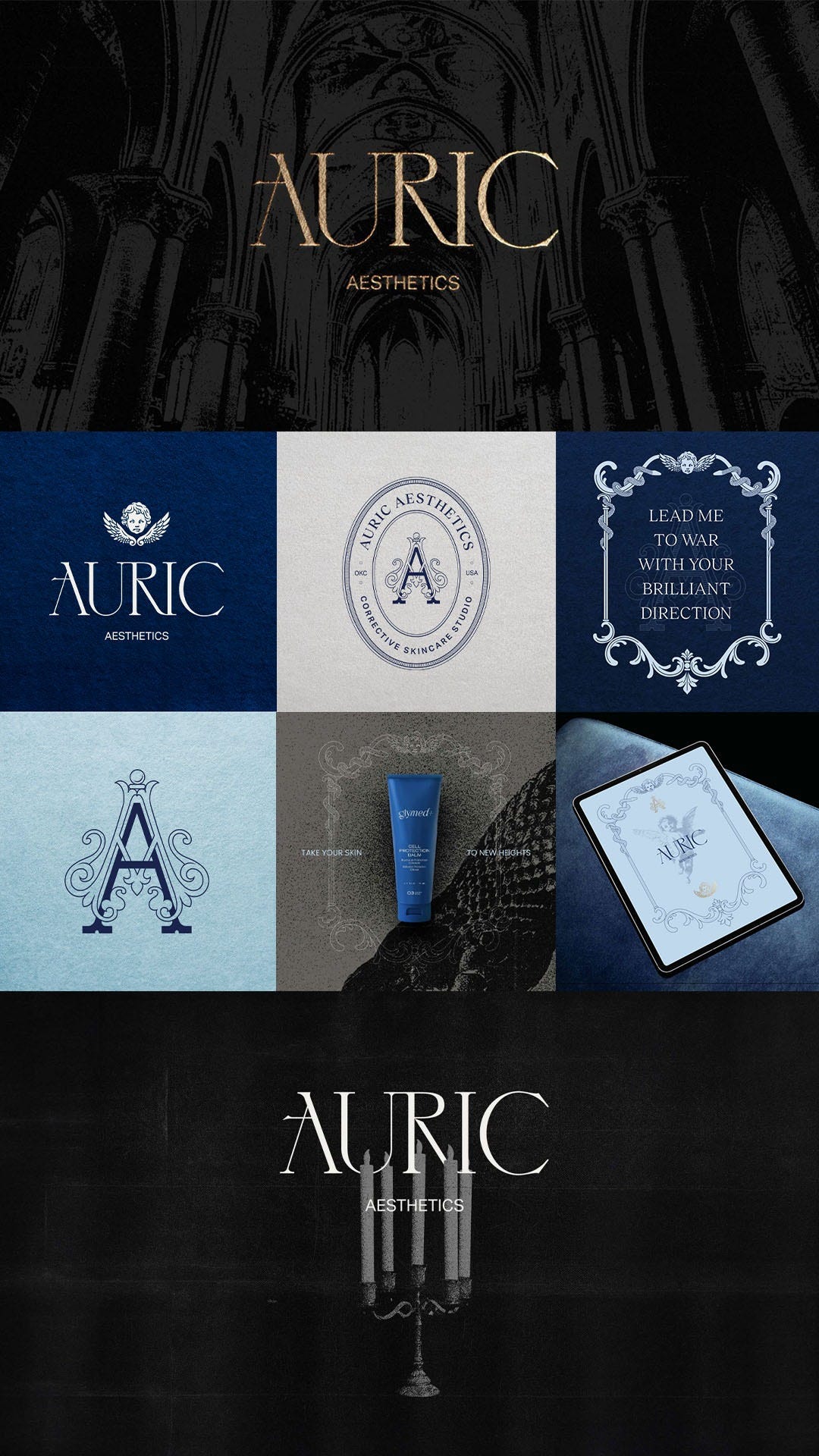
Virginia: Alright, so I am Virginia. I lead a design studio that basically specializes in brands with a dark aesthetic. That is the whole thing that we do. We do branding, we do websites, packaging, prints, merch, that kind of thing, everything that a business needs.
And we try to do everything in-house. That is one of the coolest parts, I think, and one of the things that makes us so special. You can come to us and we’ve got you. We’re going to be working with you and building your brand in its entirety and not just giving you a logo and calling it a day, you have all the rest.
We’re going to be doing the whole thing for you. The whole premise of this is that we believe that dark aesthetics can actually work for a brand, for a business, and not just on a personal level.
I have this theory that people like us, we need to see our identities reflected on everything around us. So the jewelry we wear, the clothes, the decoration of our houses, everything. And I think that the brand is also one of them.
That is what some people don’t realize. When we’re talking about people like us, like alternative people who have a really specific identity and aesthetic that need to be embraced throughout their lives, we cannot ignore the brand that it’s also on. You also need to look at your brand and see yourself, for you to actually identify yourself with the brand and for it to work.
Otherwise, you’re not going to be confident in the brand. It becomes a performance. We are not made to blend into things. I think the brand has to do this for you. Then we do this with a lot of strategies, but it actually benefits the business because obviously, businesses have different needs, different industries, different audiences. You need to know how you work with this and actually make intelligent decisions and not just, “Yeah, no, go ahead and do the black colors. Let’s do a logo with blackletter.”
What’s actually going to work with the business? Being yourself is also not an excuse for not making intelligent decisions. So I’m happy to guide my clients through this and help them navigate this and find the perfect overlap.
BW: That’s awesome. What is your design background? What were you doing before?
V: Yes. I went to design school for two years in Brazil. I was born in rural Brazil. But thankfully, my family had the money to give me a really good education. So I went to university, did the whole thing. Went to university, went to design school for two years.
But then I met a really good-looking guy, and I got married. And then he happened to work in IT, my husband. And then he wanted to move abroad. I think he got a job offer in the Netherlands, and so we went because we didn’t want to split up, obviously. We went there.
And I thought, I’m just going to continue with my studies once I get there. I talked to the universities, did some interviews, applied, got accepted immediately at one the best ones. But then I hated it. I went to school. It sucked. I stayed two weeks. And then I just thought, I’m going to do my own thing. I’m going to fix myself. I’m going to do the rest of this by myself because I trust myself more than I trust other people.
Then I started learning design independently. And then I also got up here and thought I also need to make money. So I got a job as a waitress. It sucked my soul out of my body. Never again, not for a million dollars.
I got fired when COVID hit. I was like, “Okay, what can I do?” I’m not this. And I also couldn’t apply for that. That’s the strange thing about the Netherlands. I couldn’t even apply to be a designer. And then I thought, “Okay, I’m going to do what I know how to do. It feels like design.” So I started selling logos for $90.
BW: Only $90?!
V: Yes. And I remember my idea was, You know what? I’m going to go into this Facebook group. Facebook groups with people who love Halloween and goth aesthetics and all of those. I made a whole list. Joined them.
And then I made this logo contest, which was like, I made this a nice image, nice design, and I told them, I’m going to start a design business and I want to give one of you a free logo. Tell me about your business in the comments, and then I’m going to pick one. I’m going to read all your stories, read all your ideas, everything, and I’m going to pick someone to do their logo for a piece.
It was not random. That is so exhausting because a lot of people apply. And then I did this logo, and I ended up working with really interesting people. Did the logos, and then I went from there. I’ve got my name out there a little bit. But honestly, the business and I struggled for two years, making little to no money until I got trust, and now the Studio is what it is, which is incredible. So now I’m basically the CEO and the creative director of the studio.
BW: I love hearing those stories of starting, though, because so many people think like, “Oh, well, you just started it and it was automatically successful,” or, “You just had connections,” or whatever. But it’s really hard starting out.
V: It’s hard. Holy shit. Yes. And the more people that I talk to, the more I realized that it was not just me. That is a pattern. Most of us started and messed up. And it was awful, especially the early stages of the business. You’re crawling. You’re barely making anything. You’re working for free, you’re working for like, close to free.
That is a pattern. Most of us started and messed up. And it was awful, especially the early stages of the business. You’re crawling. You’re barely making anything.
And then you raise your price a little bit. I remember the numbers. I remember it was like $90 and then $150. And then it was like, “Okay, I’m going to do more!” I don’t just do logos. I’m going to do full brand identity for $350. And then I started raising, I’ve been raising, and raising, and raising.
BW: Wow. Good. Good. You needed those higher prices.
So now, you refer to yourself as the branding Fairy Godmother, which I love. Where did that come from and what made you stick with that?
V: Yes. That came actually from one of my clients. Her brand is called Root & Shadow. Usually, our clients get really happy when we deliver the brand. Then I remember I delivered the brand to her, and then she sent me this email, basically thanking me, and everything really happy and emotional and excited.
Then she said, “You’re a brand fairy godmother. You made my dreams come true.” And I thought, You know what? That has to be really it. I actually love that. And I think it has everything to do with what I actually do because most of my clients come to us with a brand that they don’t like. Most of them already had a brand, but they hate it. It’s not them. It doesn’t feel personal.
They don’t see themselves, or the brand is boring. It’s generic. It’s bland. Or it’s like a DIY that they did, but they know that it sucks. They don’t like the way that it looks. And then this identity crisis that I see—every alternative business owner has one—their brand doesn’t match them. It’s what I’m talking about at the beginning.
What I do is I can solve that. I go in, I solve that, and now you have the brand that actually works. There’s a tension, I believe, between being yourself and looking professional. And most of the people, especially in the beginning of the business, which is when you get to make the decision about your branding, you think you have to look professional.
Nowadays, I think that’s even worse than it was five years ago. Nowadays, I posted it on Instagram, that that is like branding suicide. If you’re just like, “Oh, what are the big names doing? I’m going to copy them.” You’re done. You’re going to hate your brand.
BW: I mean, you can make the analogy, too, to tattoos in the workplace. Years ago, I would make sure everything was covered up, and now my tattoos are in my LinkedIn profile, and it doesn’t matter.
V: People are creating personalities so much. And when we tone ourselves down in the aesthetics, we regret it. I see this all the time. Clients will come to me like, “Oh, I spent all this money on this website, all this money, and I don’t like it.”
Yes. I know, because look at you. Look at the clothes you’re wearing and how you’re talking to me and your Instagram that I saw. And look at the Pinterest board you sent to me and the link on the website you sent me. They are like, this is dark academia, and fairy core, and whimsical, and whatnot. And then the website looks like, bland to me, beige, black and white.
BW: Oh, gosh. And then that’s tough for the clients, too, because they expect one thing and then they get another thing.
V: Exactly. It’s terrible. And that happens. I mentioned people who are beginning, but that actually also happens with people who have been in business for a while. They get clients who have had the business for 10 years. They are doing really well, but the brand has literally been bothering them since they began. It’s insane. It’s like an itch. It’s terrible.
I have this client who is an author, Kristen J. Sollee, who is pretty well known. She writes books about witchcraft. She was also teaching and giving lectures, giving talks. Then she felt, she told me this, that she had to tone herself down so that people would take her seriously in this environment.
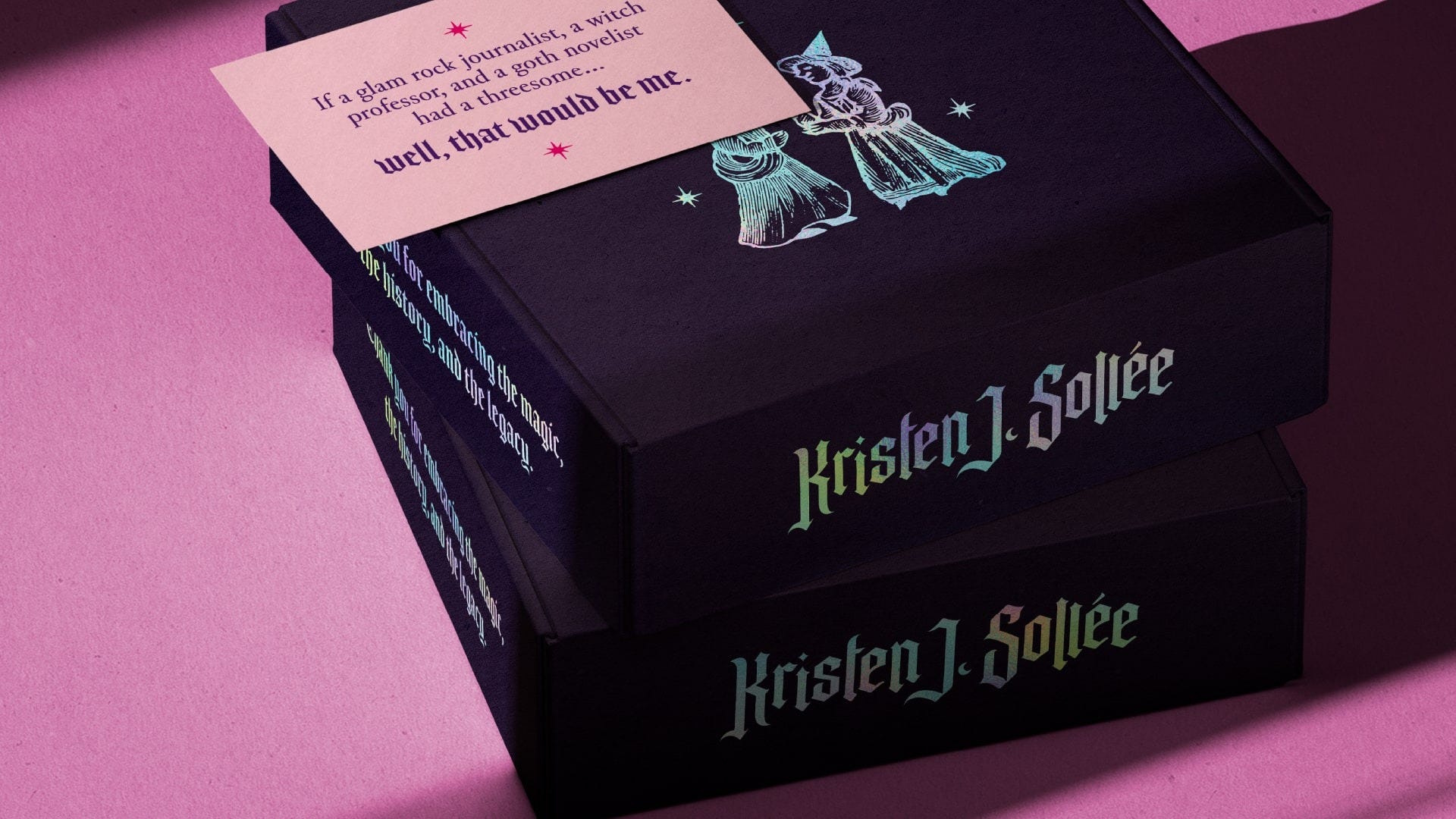
But then she didn’t like what she had. The website, it was not even for one second her. This woman is insane. Her mind is like a diamond. I saw nothing that looked like her, and then I saw her. Then I got on the call with her. I’m like, “Holy shit, we need to bring you out and make it public. People need to know you. People need to know.”
Now, her brand is one of the best ones I’ve had. People bring it up all the time. To me, the website is a scandal. Seeing how nice it is. I wish it was mine. The brand is good.
BW: Oh, my gosh.
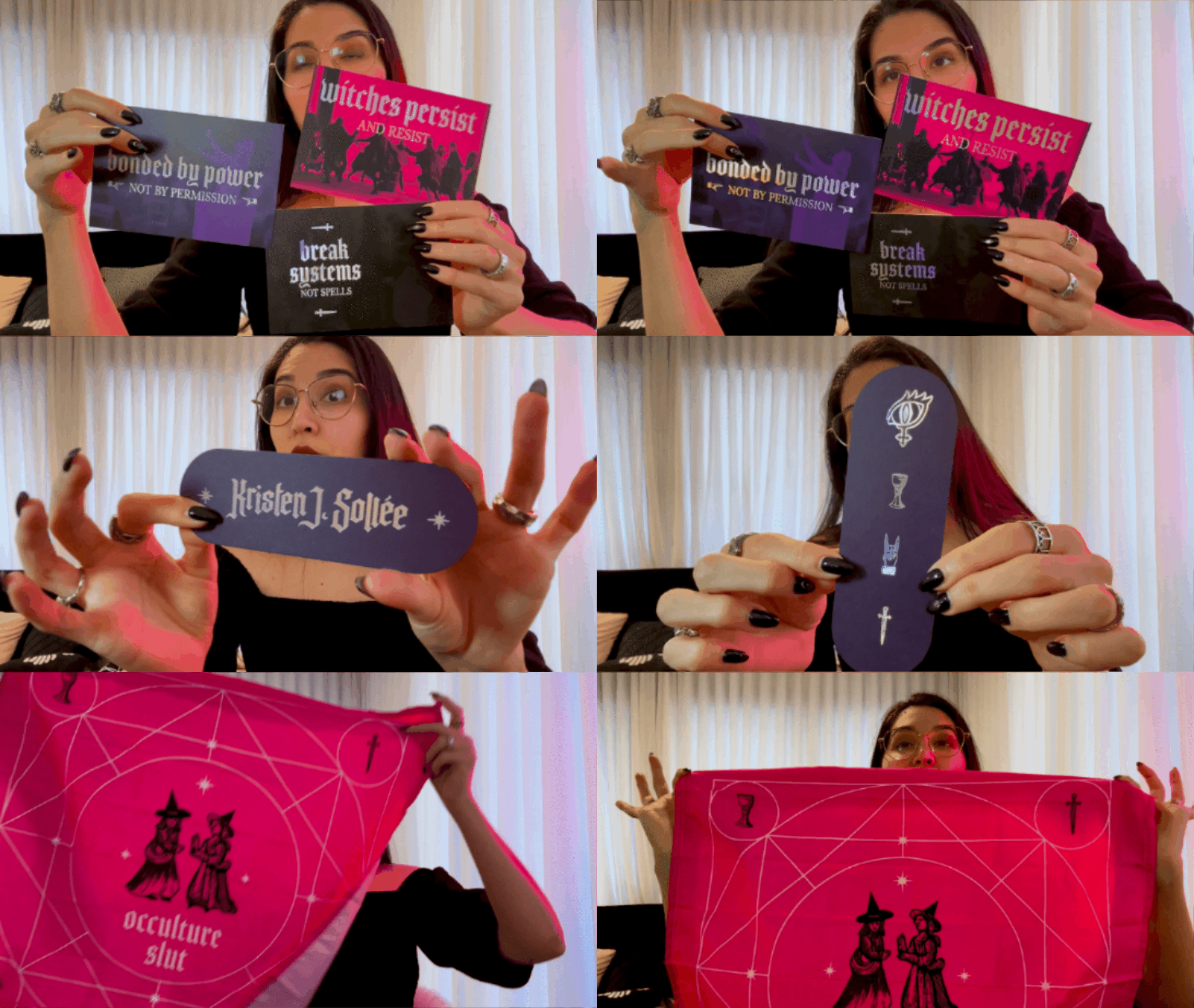
V: And imagine being the client and receiving this box. You bought the book, you don’t even know what’s going to come. And then, out of the blue, you have this gorgeous branding with the tissue paper for her. So everything’s going to be branded and have her personality in every small detail of the brand, just dripping with it, instead of, “Oh, it’s just a book inside of a regular box.” No, no, no. And now she loves everything. She’s still so excited about the brand. This is a bookmark.
BW: Oh, bookmark. Yes, perfect. Yeah, I love that.
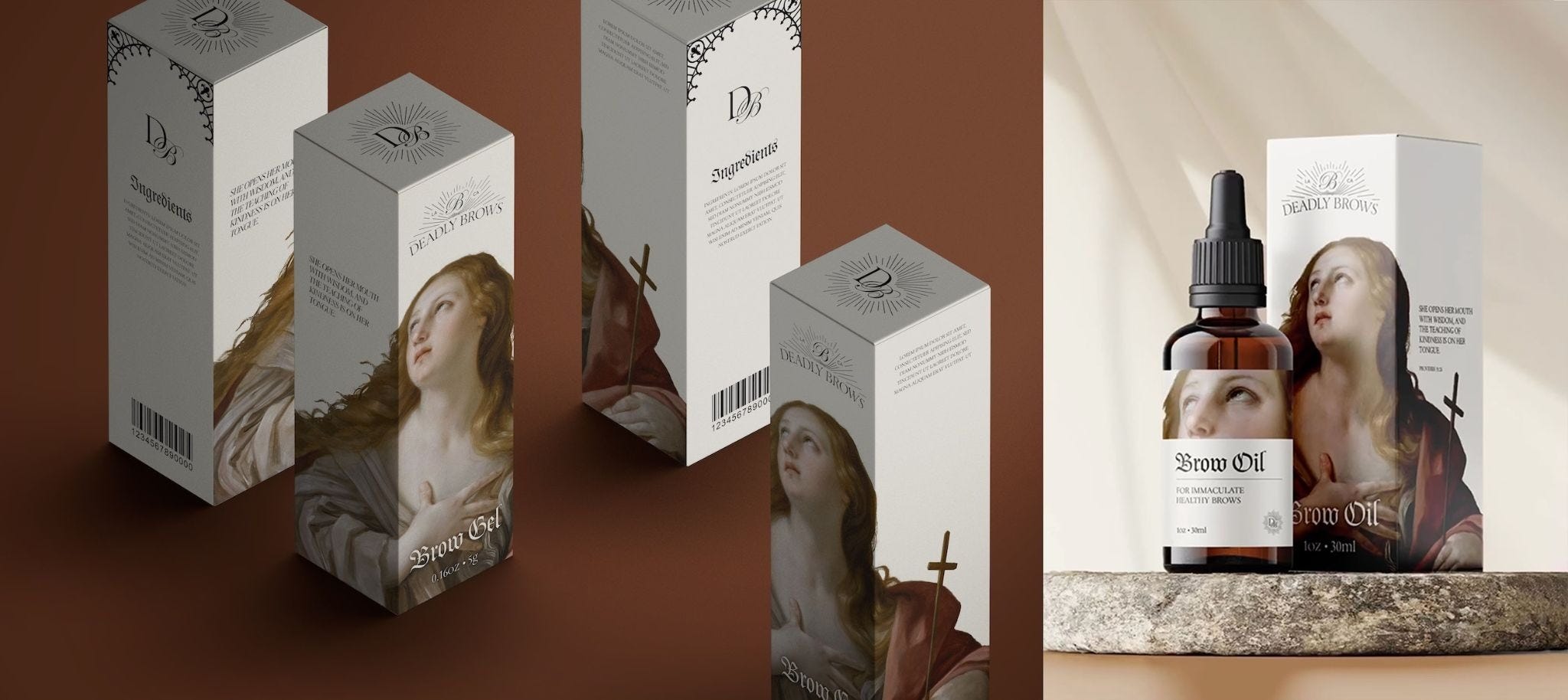
V: So that is how we roll, basically. We don’t do ordinary brands. We don’t do basic. We definitely don’t do that, like rinse and repeat. That’s how we learn to do it. It’s like, Oh, okay, you get one logo, you get three illustrations, a set of three illustrations for each person. I said, No, I’m not going to be limiting anything. I’m going to be getting to know you like the back of my hand, and I’m going to give you the best brand possible. Especially now with AI and people using brands or AI for branding or for websites, it can spit out the same thing over and over again.
We don’t do ordinary brands. We don’t do basic.
BW: And AI is going to look the same. But this is the stuff where you’ll know that it’s not AI from looking at it.
V: It could never. AI could never.
And I was having a talk about this a few days ago with somebody who played tennis with me because he asked me, Oh, you’re a designer? Isn’t your niche really suffering with AI? And I said, No, not on the level that we operate in. I guess people who do the basic have logos, like in Fivver for $10, they’re probably out of business. Because that is what AI spits out, the $10 logos.
But the thing that we do, absolutely not. Each one of our brands are so different from each other, and so unique, and so rich in the concept. You see it everywhere, the vibe and everything. I don’t think it exists, especially specializing in dark aesthetics.
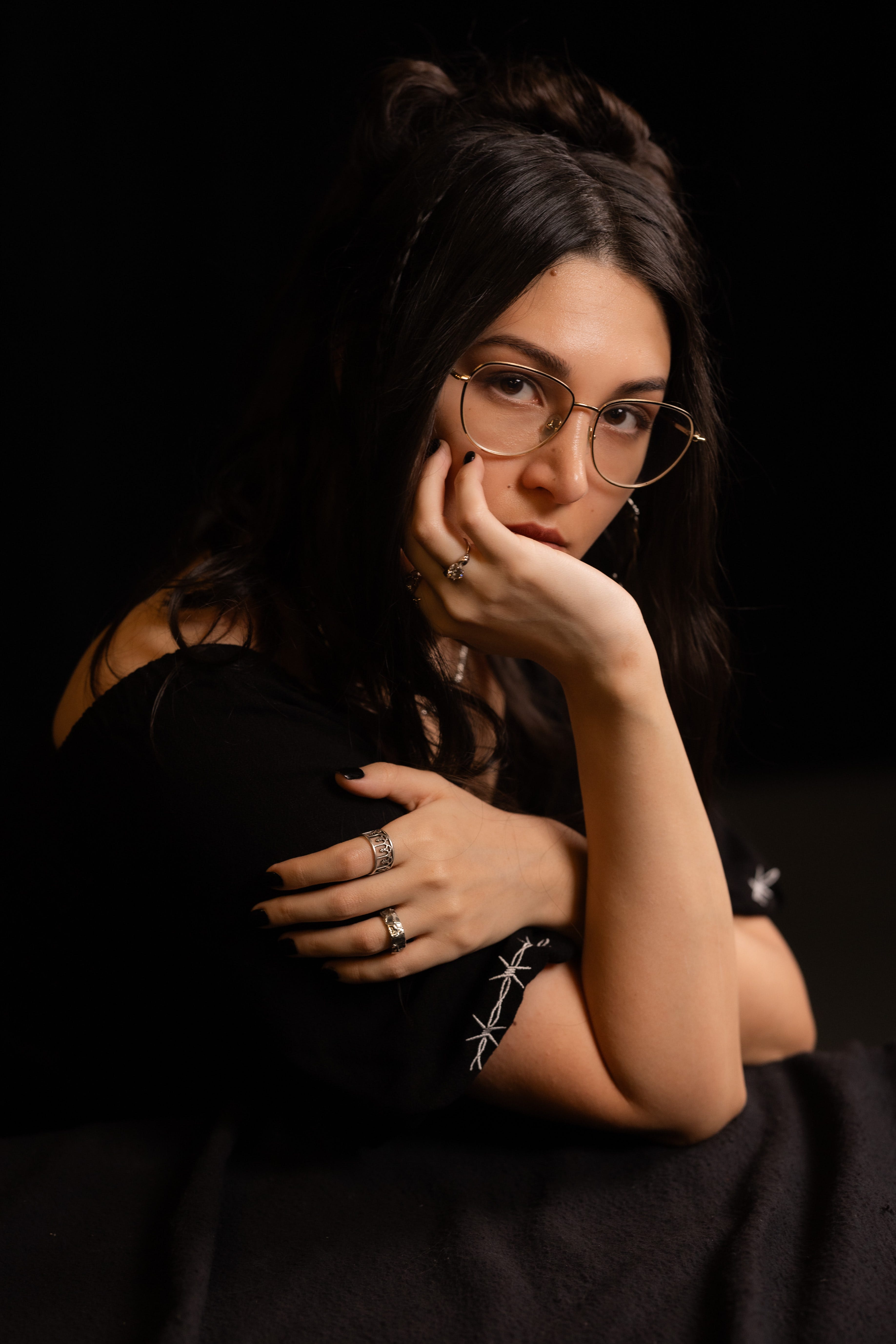
BW: What drew you to that vibe, and made you think, okay, I can make a business out of this?
V: To be honest, it was a really selfish reason, and I’ve also talked about that, which is simply that that is my life. That is the thing that I like. That is always the music that I listen to, the movies that I always gravitate towards, the aesthetic that I always felt drawn to.
When I went to design school, I couldn’t do this because they give you regular projects to work on. I want to work with weirdos like us. And that’s why. And then I got my client like this. And the focus of the studio was always brands with dark aesthetics from its birth, and it is to this day.
But then as I started this, I realized how people needed this. In the beginning, I didn’t know if there was going to be a demand. And to be honest, I was so bad at business. I didn’t have a strategic mindset at all. I was like, I’m going to be selling logos. I didn’t even know if there was going to be a demand or not, because when I started thinking about this, I was like, Oh, but there are not enough brands like this in the world. But there are.
BW: They’re just hiding. Hiding behind not-alternative logos.
V: And then I started talking to people and having clients, and I realized people are craving this so much to the point that people cry with me on the calls. They cry when they see their brands. They show me photos of themselves. They get their logos tattooed. We have brands that are tattooed on people. It’s on our website.
BW: That’s so meaningful.
V: Do you realize that this is how much they need it? It’s not a surface-level thing at all. It is something that has to do with their soul and their identity. It goes so deep. So I’m really glad that I did this. It was a self-reason at the beginning. Now, it’s my mission and I’m convinced. And I think it is so needed.
BW: How do you address the worry that a lot of them have that they won’t be able to make those dark aesthetics work for mainstream audiences?
V: That is a super common situation. People are afraid. And I’m going to give you the solution directly. It is to execute it well.
I feel like when dark aesthetics fail in branding, they become cheesy and weird, and scary or Halloweenish, which is not what we want, it’s not what we do. We don’t do Halloween brands.
Let’s take the things that are going to make sense for your business and make them shine. We’re going to do it so well and so beautifully that everyone is going to like it. I feel like with all the brands that we do, anybody could like it. You don’t have to be a goth or the alternative.
Anybody could appreciate them because they’re just so interesting and so beautiful to look at and different. And being different is what makes them special. So I think it comes down to the expertise, basically.
People are afraid. And I’m going to give you the solution directly. It is to execute it well.
BW: What are the mistakes that you see when it comes to some of these types of brands?
V: I think not making a brand that is actually functional. You know when people get these palettes from Pinterest and then they try to make a website with the palettes, and there is not enough contrast. It’s not working. It works on a photo, but it doesn’t work as background and graphic. It doesn’t work for the text. The hierarchy is all wrong.
Something like that, to me, it’s a dead giveaway that it was not properly done or it was DIY or done by somebody who doesn’t know what they’re doing. I think that is a huge mistake.
Something that is very obvious, and people still do it, is get this crazy font, this crazy blackletter font, super ornate. And then they come up with a business name that is my whole name. It’s like 40 letters. They want to write that down in that crazy font. It’s not legible. It’s not going to be functional. Plus, you only have one version of that logo. What do you do if you have a logo like this and now you have a space that is round? You needed a brand icon for that.
You have to have a brand identity system with all the ingredients, all the basic things that you’re going to need. And that’s why we don’t do just logos. I have a conversation about it at least once a month.
Somebody will say, “Oh, I would love for you to do my logo!” I’m not going to do a logo. I’m going to give you your brand. If that’s what you want. Because a logo is not going to satisfy you. It’s not going to cover your needs. You’re going to have to still figure things out by yourself, and you’re going to mess it up because you don’t know how to do it. You’re not a designer. You don’t work with it. I feel like sometimes people think that with Canva. They can’t. It’s a really bad idea.
Find a professional. They’re going to guide you. They’re going to do things for you. They’re going to take the decisions off of your shoulders. Because that’s the other thing. I feel like our people, at least, focus a lot more on aesthetic and visuals than regular people. You could give a dentist a logo like, Yeah, that’s it. Let me get my next client. But for us, again, it has to do with identity. We care so much about this, so it has to work.
BW: This reminds me. I was having a conversation with a friend last night about dark academia books, and she said, “Sometimes it’s too much vibe and not enough substance.” And I think that’s almost what you’re getting at with some of these brands. It’s too much leaning into the vibe without having the substance behind it, the business.
V: Yeah, yeah, yeah. And I think that’s a very good point. I think there’s also a reason why it makes sense to hire us. If you want this brand, this aesthetic, this vibe, this concept, hire somebody who also knows that, somebody who grew up looking at these things, reading about these things. They are an insider.
I think that I have my clients just for the expertise in branding that they need. So they don’t have to come to me and explain to me the vibe of that Tim Burton movie or the book by Lovecraft and these stories. I know. I grew up watching those things and reading them. I know.
Yesterday, we were talking about Ouija boards in a discovery call. And it’s like, yes, you don’t have to explain to me what they look like, what they are used for. I have the whole box of information. I’m able to dive into your universe so much easily, and it’s so smooth. I listen to the playlist my client sent me. I see our brands in their Pinterest boards when they send them.
BW: That’s the best.
V: Exactly. That is how connected we already are. So it’s so much easier than if we’re going to go to a random designer, like a random Joe, and just try to explain yourself to them. Probably not going to work. And that is also one of the reasons why I get so many frustrated clients that came from somebody else, some random person that they hired. Obviously, they didn’t give them something that satisfied them for real.
BW: Yeah. And a lot of the brands that you work with seem to be very witchy, which does not surprise me at all. Do you have a witchcraft practice yourself that connects you to those kinds of clients?
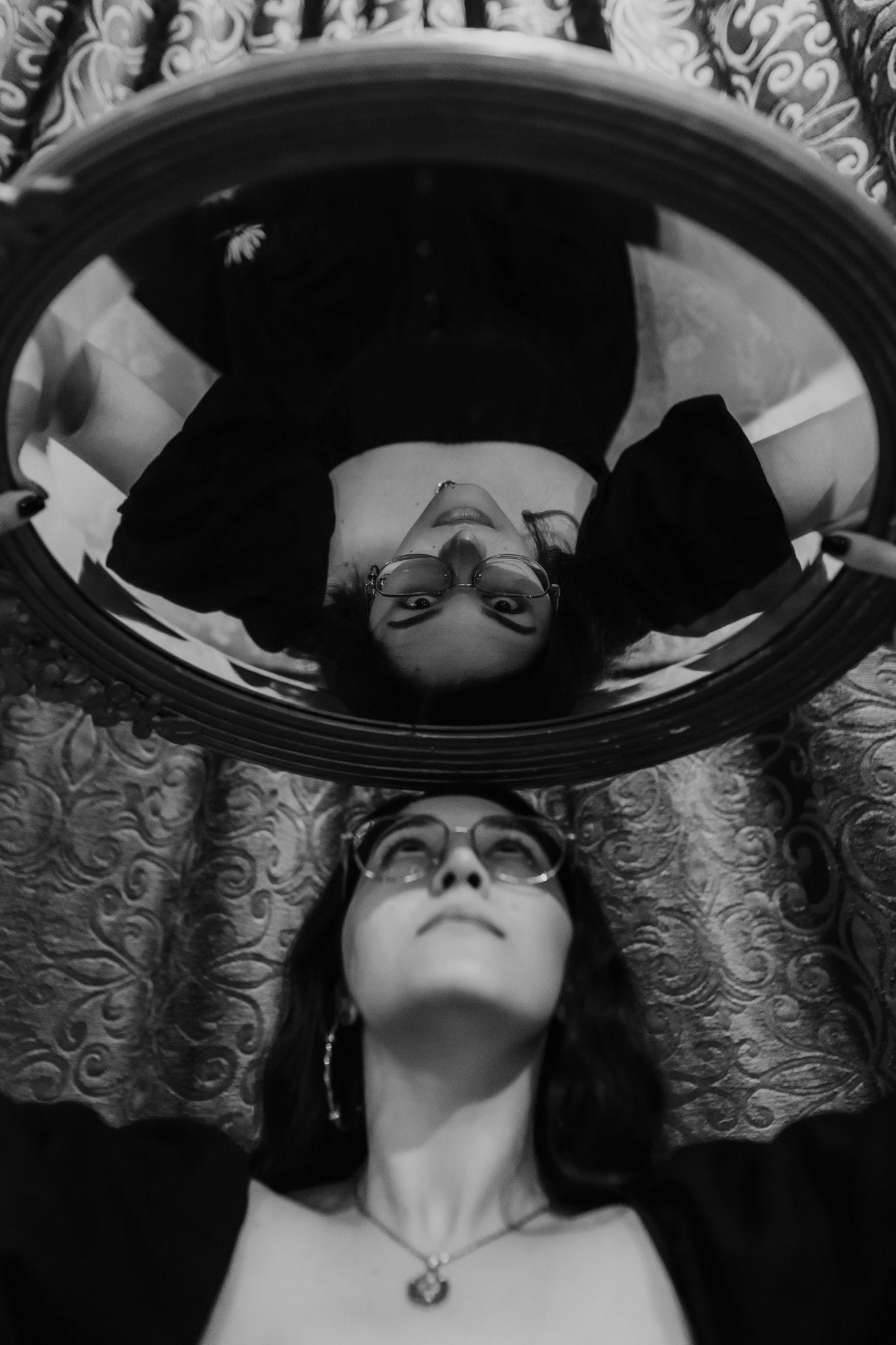
V: I don’t. And a lot of people assume that I do. I’ve always been drawn to witches and the idea of witches. I have a photo of myself when I was six years old at a Halloween party, and I was dressed up as a witch, obviously. There’s nothing else that I would have done. And I’m standing in front of a mural, leaning forward, and I’m looking at myself, and that is my favorite photo of me. I was like, you can- If you can find that, you should send it to me.
I think that is also the closest that I’ve seen myself on the outside, my identity on a photo, which is incredible. But I’m not actually a witch. I don’t actually practice. It’s just that I love the concept. I love the idea, I love the stories, I’ve always loved the movies, everything. I’ve always been drawn to the figure of the witch.
And now I work with actual witches, which is really cool. So I get to also know their practice and their ideas and the things that they think about, that thing. But I myself, no, I actually don’t believe in anything.
BW: The next question I know you’ll relate to because being a small business owner is a ton of work, as you’ve already mentioned. So how are you doing it all while staying balanced, or at least attempting to stay balanced?
V: Well, the first thing is that I have a team nowadays, so I’m no longer doing everything by myself. I used to do everything by myself. But with the demand growing, it just became impossible, impossible at some point. I was literally not doing anything for, I think the first three years of the business, I was not doing anything other than working.
BW: Oh my gosh.
V: I was not going to the gym. I was not going out. I was not watching movies. I was not reading books. I literally did nothing. It was one of the worst periods of my life because of that.
BW: Yeah, that’s depressing.
V: Yeah. I think it was necessary to kickstart the business, and I don’t regret it at all. I’m so thankful that I did this. I don’t know how I did that. I would work, literally, from the time that I woke up. It’s like those crazy startup stories.
But eventually, I started hiring people because I had to. The demand was so huge, I could not take care of it. And then delegating tasks. And now we actually have a functional design studio where people divide what each person does, so the load is a lot lower.
Now I can do a bunch of things. I read every single day. I watch movies. I hang out with my husband, which I was not even doing back then. I go to the gym. I started playing tennis also, which is something that I hated when I was a kid, and now I love it.
So now my life is really fun, and I love it. And that is also better for creativity, as you probably know. So now I’m having fun with the business again for a while.
I want all my designers to be better than me, and they are. And I’m going to do a lot of work to find the right people. And I think I have... I love them. They’re incredible. So talented, so creative. That’s special. And that is how you get the results when you get it. I’m really happy.
BW: How do you see the studio growing in the future?
V: I want this to be like, the design studio in the world for brands with a dark aesthetic. I think it already is because like I said, I don’t see anybody doing the shit that we do at the level that we do.
But I want it to be bigger, a lot bigger. I want everybody to know us. I want people to bring us up. They already bring us up sometimes. But I want even more of that. I want for that to be no question.
It is them. Everybody knows Tarantula Studios. Virginia from Tarantula, talk to her. You need a brand, go to her. They’re going to get you. They know exactly what you need. They’re going to give it to you. You’re going to be amazing. You’re going I love it. I want this to be common sense in this community. That is how I wanted to grow, for us to be this symbol of branding for dark esthetics equals Tarantula Studios.
But I want it to be bigger, a lot bigger. I want everybody to know us. I want people to bring us up.
BW: Where did the name come from?
V: In the beginning of the business, I was hiding the fact that I’m from Brazil because I was embarrassed and I thought people were not going to like it. They’re not going to want to work with me if they know.
Even when I was working and living in the Netherlands, I thought they’re going to have prejudiced against me. And my accent. I literally downloaded an app on my phone to train myself to speak without an accent. Now I don’t anymore. People like my accent, I realized. I’ve got DMs like, “Where are you from you sound like my mother’s accent?”
And Tarantula was the only connection that I made with it because of the Amazon forest which I’m obsessed with. It’s the right scary. It is like, in the best way. You see the photo? It gives me hope to see photos of the snakes and the rainforest and so dark and weird and that water, the muddy water.
BW: Yes, I know what you’re talking about. I love seeing branding professionals doing stuff for their own brand. That is always exciting to me because that’s where you’re doing whatever you want or what you really want to do.
V: Yes, for sure. And having fun with your own business, which is what I try to make my clients do. I also have to do that with my own. I have to make her the coolest thing I’ve ever seen in my life, something that I cannot believe exists. And I cannot believe that I made it. So that is the goal here.
If you’re interested in being interviewed or promoting your projects, please reach out to me at kira (at) busywitch.com.
This interview has been transcribed and edited for clarity and conciseness. All mistakes are my own.
Submit your ideas!

Have something you want to share? Whether it’s a witchcraft-related secret, a new poem, a personal essay, or a wild short story, I want to take a look. Send me an email at kira (at) busywitch.com.