


Witchy Community as Resistance
This week, there’s another edition of The Fang! For this issue I’m sharing the first part of my interview with Hannah Levy, founder and editor of The Rebis, a magazine publishing writing and art related to tarot. She’s created a wonderful community of creatives and witches who believe in resistance, and I’m excited for you to learn more about her. But first, our invocation…

Invocation
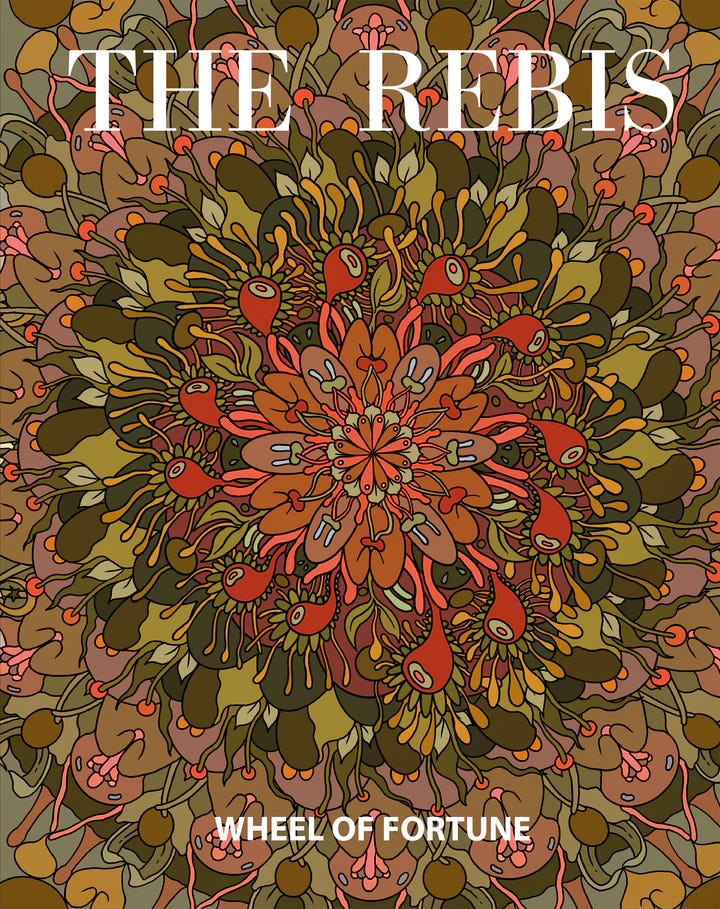
This week’s invocation poem comes from the first issue of The Rebis, Wheel of Fortune.
Valve
by Joe Chaplain

I tread the narrow pathways
in the confines of my mind.
The echo of my footsteps
splash in stagnant water.

The pulse of the Earth
shudders in my synapses.
I graze their labyrinthine pipework
with the palms of my hand.

Everything grinds to a halt.
Pressure builds behind me
as my way ahead is blocked.
Oppressive forces bearing down.

The walls are closing in
memories of a dark past
projected on their surface.
Struggling to breathe

I reach out both my hands
grasping with intention.
With every fibre of my being
I twist the handles of the wheel.

Creative Prompt
Every week is better when you make time for creativity. To me, it’s essential self-care. Here’s a prompt for you to try yourself:
Flip to the 30th page of a book on your desk. Use the first full sentence as the start of a short story or poem.
If you share your creations, tag me on Instagram! @busy_witch
Last Week’s Prompt
Look up an origami pattern you’ve never tried before. It can be as complicated or as simple as you want. Follow the instructions to the letter, then journal about how participating in a structured activity affected your creativity levels.
Here’s my response to the prompt:
I followed this video to painstakingly make this little guy (it’s supposed to be a bat):
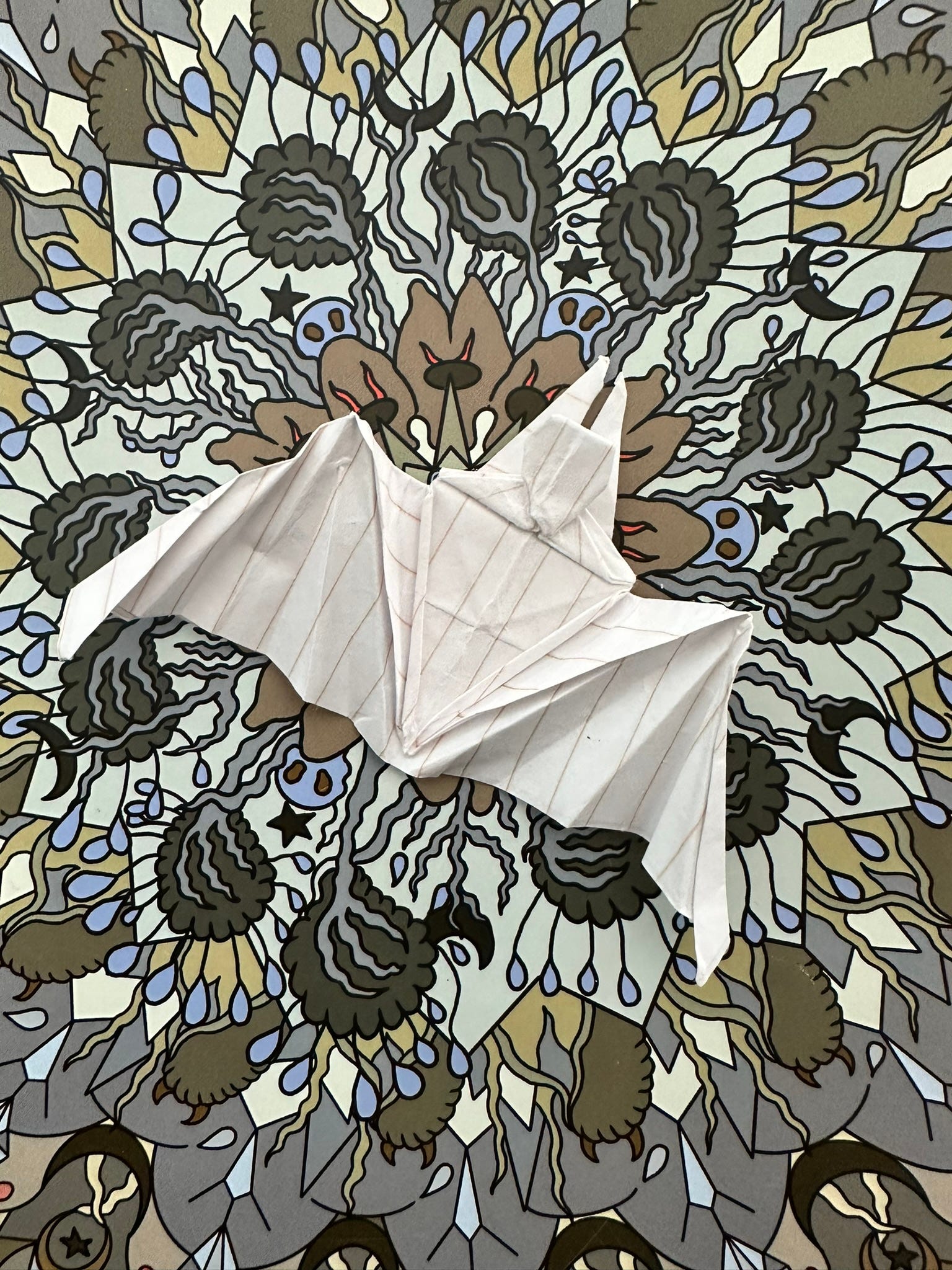
He could definitely be better, but I did my best and it was fun. That’s what counts, not his messed up little face. (P.S. — the background is the back cover of the Wheel of Fortune issue of The Rebis).
Divination of the Week
For this week, a quick past, present, future!
The Reading
Past: Six of Pentacles (Reversed)
You’ve been giving, but not receiving. You may feel like you’ve been taken advantage of because of a lack of reciprocity. Think back. What in your recent past has felt like an unequal exchange?
Present: Two of Pentacles (Reversed)
Right now, there’s a lot going on and it feels very overwhelming. It may feel like you’re doing too much or there are too many tasks on your plate. This may be causing you to neglect the things you actually care about.
Future: Five of Swords
More stress is coming. There’s tension, and you really want everything to work out. Look back at the past two cards. What have you been giving your energy to? What do you really care about? A little conflict, whether internal or external, may help you reset your focus.


Introducing The Fang.
Sink your teeth into these witchy works.
This week: An Interview with Hannah Levy, founder and editor of The Rebis.
I’ve been wanting to talk to Hannah Levy for a long time. I was a little bit of a fangirl when it came to her publication, The Rebis. Tarot and creative writing? Sign me up.
So when I finally reached out to Hannah and she was game for an interview, I was thrilled. I was honored to get some face time with another witchy creative who founded a tarot-focused publication with community-focused, anti-capitalist principles.
Below is the first half of our interview, where we discuss the start of The Rebis, building the community, and what could be next for the magazine.
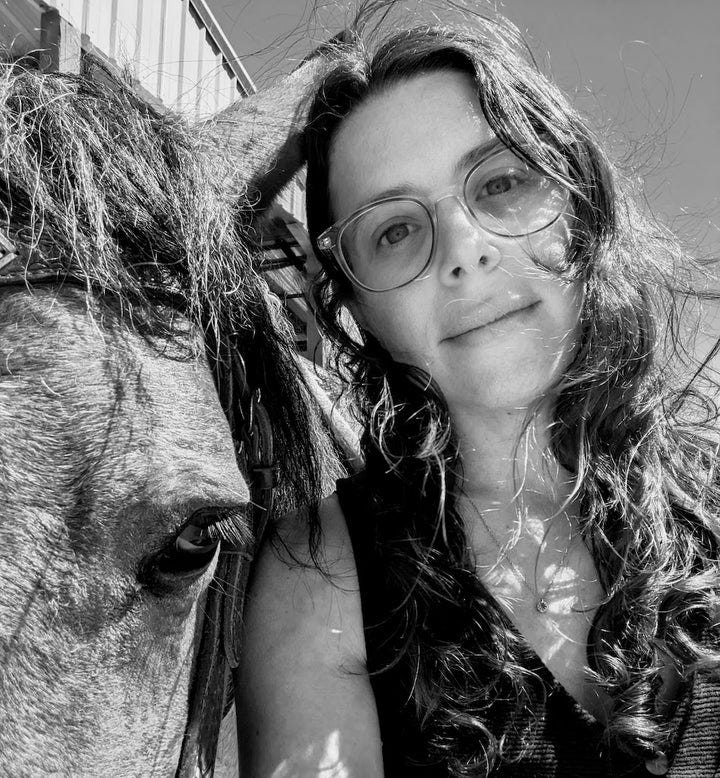
Busy Witch: My first question is the general elevator pitch. Tell me about yourself: your name, where you're from, and how you define yourself and what you do.
Hannah Levy: My name is Hannah Levy. I live here in Northern California, in Berkeley, and I'm the founder and editor of the Rebis. We are a tarot-themed literary anthology that combines art and creative writing: everything from fiction, nonfiction, poetry, prose, speculative works and experimental writing. We put it all in an annual print anthology.
The Rebis is really focused on exploring a single tarot card with each publication. So we choose a tarot card for the year, and then we invite writers and artists to submit work based on their relationship to the card and how that card is showing up for them.
This project started in 2022 on the heels of creative burnout. I worked for 15 years in tech marketing here in the Bay Area, where I was a director of brand marketing and content marketing. I ran creative teams that did a lot of digital marketing—so email, social media, all that. And I was really craving an antidote to online content consumption.
I had my own spiritual practice and ritual through tarot. It was just a really powerful storytelling framework for me. The archetypal imagery really spoke to the way my brain works. I was seeking all these tarot resources over the years (I have a lot of really amazing books) but I wanted to bring all these different perspectives together in a creative way to showcase the depth and breadth of how tarot can inspire artmaking and storytelling.
I couldn't find it, so I thought I'd build it. That was kind of the genesis of the publication. My goal was also to do this as an offering to the world we have been facing, and to be kind of like a light in times of darkness. I founded it on anti-capitalist principles, where we focus on trying to elevate underrepresented writers—people who may not be getting book deals, may not have their work in print. Emerging writers as well.
We pay artists and writers for their work, and then, after operating costs, we donate all of the proceeds. All the sales profits go to three different nonprofits that are focused on social justice, reparations and reproductive justice work.
We pay artists and writers for their work, and then, after operating costs, we donate all of the proceeds. All the sales profits go to three different nonprofits that are focused on social justice, reparations and reproductive justice work. It's a way to put out art while also furthering the work of our collective liberation.
BW: I saw that it's not for profit on the site and all of the places you donate. That's really cool.
HL: It's been a really rewarding piece of it, to be able to offer someone an exchange where I give you this beautiful, artful magazine. It's like an art journal. It's meant to be savored, and we try to make it a really high-quality, tangible experience. The cover is thick and the pages feel good in your hands. It’s something that you want in bed with you, or you want to take on an airplane, or bring to the beach or river. It’s something that you can touch and savor, and then in exchange, you know that the money is going to the artists and the writers and to nonprofits. It's a feel-good purchase.
I think that it's been really connecting with folks. We've been growing over the past three years. We've done three publications so far. We did The Wheel of Fortune, The Chariot and The Star. Every year we get more and more submissions and reach more people. Our independent bookstore partnerships have grown. We're now doing some online distribution through some independent publishing distributors. So, yeah, it's been really exciting.
I didn't have a set goal going into the project. I wasn't like, “Oh, we're going to do the fool’s journey, all 22 major arcana cards.” The Wheel of Fortune spoke to me as this surrender to change and impermanence and chaos and fate. I wanted to unpack the interconnectedness of the wheel. From there, I was led to The Chariot, and from The Chariot, I looked up at the stars. We'll see where we go next. It's been a really interesting narrative to move in a non-linear way through the major arcana.
BW: I like that it's not going in order. I feel like The Wheel of Fortune is such a good card to start with for something like this, to be honest.
HL: I mean, it's the middle of the deck and middle of the major arcana too, right? It's number ten. I think it also taps into collective energy. This year, in January, when I thought about the work ahead, part of me really wanted to explore Justice. That card was just showing up in a very heavy way, personally and collectively. And I sat with it for a long time, weeks. It felt like lead inside of me, thinking about editing and pulling work together around that. I realized the reason why is because we're living and breathing Justice. We were living and breathing that.
I wanted something more aspirational. I wanted something weirder. I wanted something that would crack things open a little bit and create movement and fluidity. That's what led me to The Star.
I wanted something more aspirational. I wanted something weirder. I wanted something that would crack things open a little bit and create movement and fluidity. That's what led me to The Star. It was just a really transformative experience, being able to immerse in Star energy and think about the future and think about hope and think about building existential resilience when we were experiencing The Tower, because The Star comes after The Tower. So you're living through The Tower, and you're still able to imagine The Star and hold that close. That was personally really healing for me, and I think for a lot of the people who contributed to the publication.
BW: That makes a lot of sense. Justice would have just been so heavy for you to publish this year.
HL: A little too on the nose, right? Yeah. So it's kind of a creative cycle where we open up submissions in spring, we collect everything together through the summer, and then we come out in the fall. This year, I immediately feel energized to start working on it again.
We need to save that piece of ourselves that can create in chaos. And I think the work of artists and writers right now is more important than ever.
I don't think I'm going to. I think I'm going to allow myself to rest a little bit creatively and hibernate and work on some personal projects over the winter. But I feel like now, especially this week, [election week], more than ever, we cannot let the heaviness detract from our joy and from our hope and from artmaking. We need to save that piece of ourselves that can create in chaos. And I think the work of artists and writers right now is more important than ever. Any organization or publication or any person who is working to support artists and writers, I have so much admiration for, and that's what I aspire to.
BW: I mean, The Rebis is one of those!
HL: I feel like it’s a community effort. I can't do my job as the editor without all the people having the space and time and emotional capacity to create, and so it's that energy of pouring into their cup, pouring into your cup, and then you can pour back into the community. Reciprocity is really important to me.
BW: When you were starting The Rebis, did you already have a big community behind you? Or were you just like, all right, I'm gonna try this. Let's figure it out.
HL: Nope, I had no social media footprint or brand recognition or anything. I had no Instagram. My personal Instagram was private. Sometimes I posted tarot poetry on there, but it was mostly friends and extended community. Over time, I still don't have a huge Instagram following on my personal platform. It's very modest by published writer standards. I think I have like, 1,200 followers. It's not nothing. Still, I don't invest a lot in social media, because I feel like the benefit for me is truly in the one-on-one connections I've made through that platform, especially Instagram.
I reached out to a lot of people cold. I was like, “Hi, I would like to start a tarot literary journal. Do you want to contribute?” And I was surprised at how many people were willing to take a chance on it, you know? It was validation that I think the community wanted, and they felt excited by the project. Everyone that I invited for that first publication of The Wheel of Fortune…everyone said yes.
BW: Wow.
HL: It was really exciting. And a couple people told their friends, and then we got the ball rolling. I was calling up indie bookstores, asking, “Do you buy magazines? I have a self-published tarot magazine.” Slowly, over time, we built that community. We started a Substack, which is a free, behind-the-scenes newsletter where we do profiles of our artists and writers and share updates on the publication and our profit redistribution efforts and all that.
From there, for The Chariot issue, we opened up submissions. I got a lot of people contributing, a lot of previous contributors contributing. Previous contributors shared on social media and it snowballed with momentum from there. For The Star issue, we had over 100 submissions, and we can only take around 30 to 33 depending on how big we want the publication to be.
I wanted to focus on print only for a while, because I believe in print. I don't think print is dead. I think that there's power in the written word on a piece of paper.
I wanted to focus on print only for a while, because I believe in print. I don't think print is dead. I think that there's power in the written word on a piece of paper. And there's something really cool about not knowing where magazines end up. They could be in a little free library, or on someone's shelf. The idea that it's physically traveling all over is really exciting to me. I'm thinking about expansion and how to support the community more and ongoing efforts, versus just the one-time release. I'm thinking that digital may be in our future, so stay tuned.
…to be continued next week!
If you’re interested in being interviewed or promoting your projects, please reach out to me at kira (at) busywitch.com.
This interview has been transcribed and edited for clarity and conciseness. All mistakes are my own.

Current Read
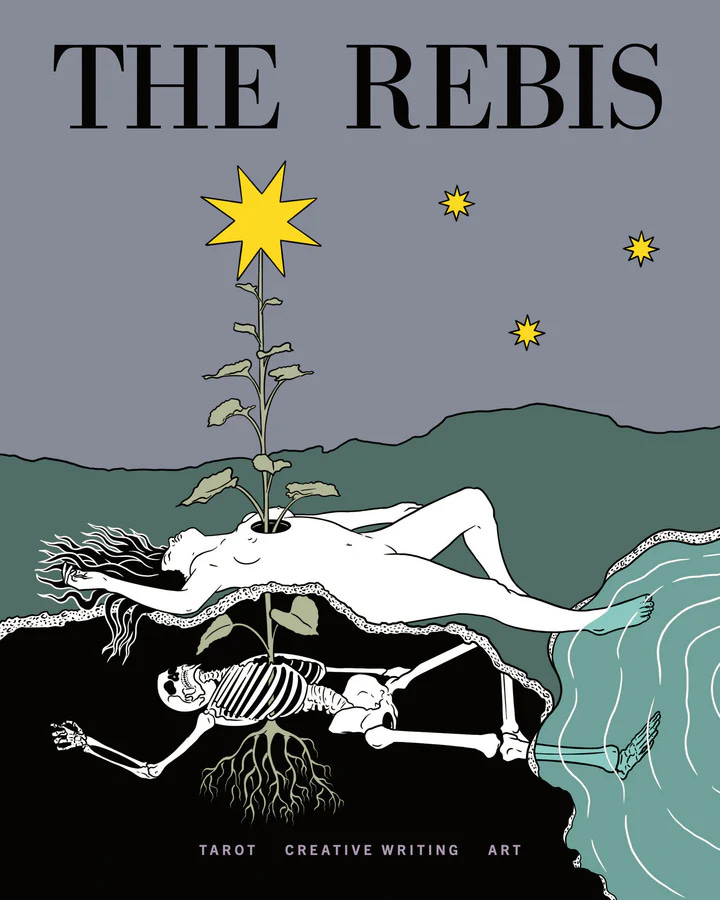
My current read is the most recent issue of The Rebis: The Star!
Submit your ideas!

Have something you want to share? Whether it’s a witchcraft-related secret, a new poem, a personal essay, or a wild short story, I want to take a look. Send me an email at kira (at) busywitch.com.